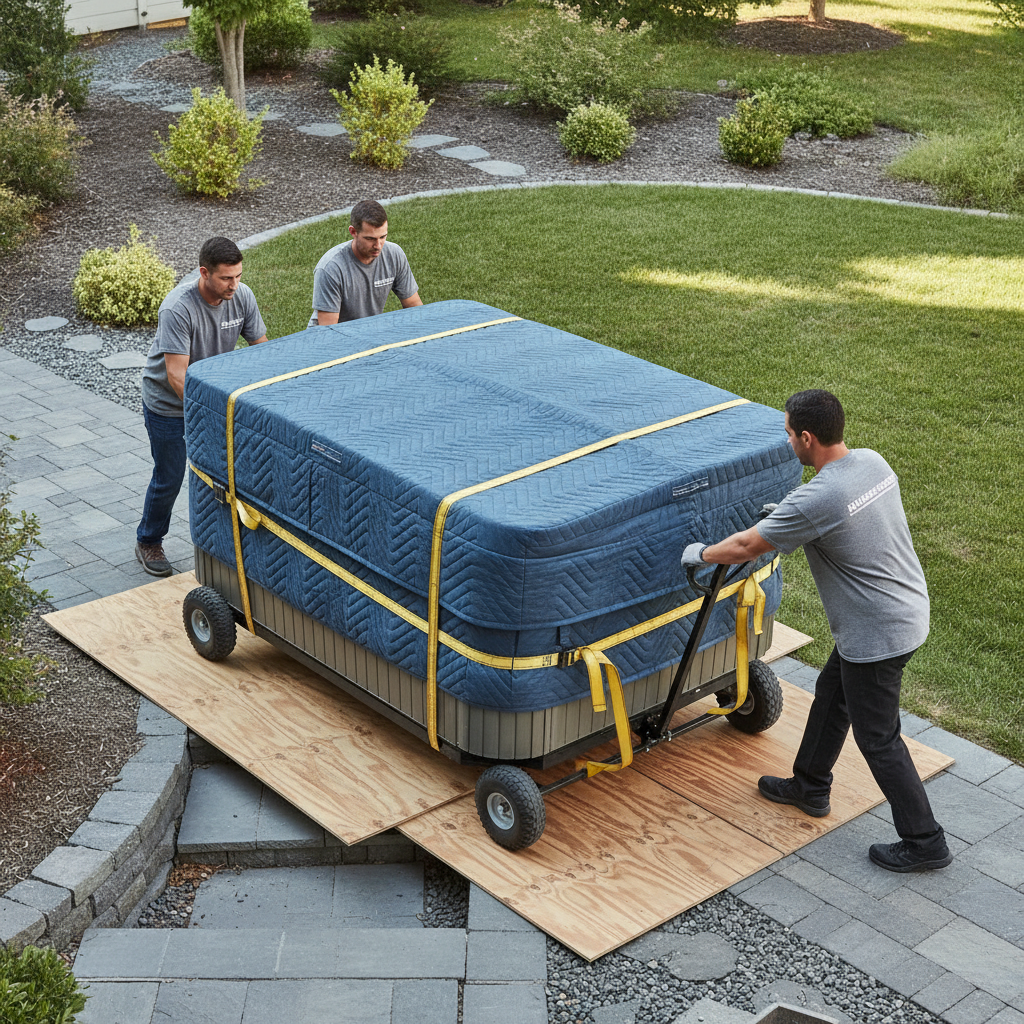
Hot tub moving cost is the total effort to relocate a spa safely, shaped by size, access, distance, gear, crew skill, and risk controls. The fastest way to keep it predictable is strong prep: accurate measurements, clear paths, complete draining, and professional handling with specialty equipment. This guide shows exactly how.
By Let’s Start Moving · Last updated: 2026-07-01
Summary
Hot tub moving cost depends on four levers: weight/size, access constraints, distance/logistics, and risk management. You lower the effort by draining and drying early, measuring every turn, clearing 36-inch paths, and hiring specialists with spa dollies, ramps, and lift plans. Good prep removes surprises and protects your spa.
Here’s what you’ll take away from this complete guide:
- What “hot tub moving cost” really includes and why it varies from home to home
- A clear, step-by-step process pros use to avoid damage, delays, and rework
- When dollies, ramps, mechanical assists, and cranes are the right tool
- DIY vs. pro handling trade-offs, including safety, gear, and liability
- Practical prep checklists to streamline move day and protect property
What Is Hot Tub Moving Cost?
It’s the professional effort required to relocate a spa without damage: planning, draining, disconnecting, lifting, transporting, and positioning. Size, dry weight (often 500–1,100 pounds), access, and safety protocols shape the workload. Specialists bundle labor, equipment, materials, and risk control into a single project.
At its core, hot tub moving cost reflects complexity. A 7-foot square spa around 800 pounds with a clear, ground-level path is simpler than an 8-foot unit tucked on a deck behind narrow gates. Every extra turn, stair, or slope adds touchpoints, and each touchpoint adds time and risk management.
- Scope of work: plan route, drain, disconnect power, tilt and secure, load, transport, unload, position, level, and optionally reconnect.
- Typical specs: footprint 6–9 ft; dry weight 500–1,100 lbs; water volume 250–500 gallons; height 30–40 inches.
- Constraints: 90-degree turns, 30–36 inch gates, thresholds, deck stairs, soil or paver paths, and overhead lines.
- Special factors: acrylic vs. rotomolded shells, wood vs. synthetic cabinets, integrated steps/covers, and fragile control panels.
Why this matters: the more variables you simplify before move day, the less handling time and risk the crew must manage. For instance, removing a fence panel to create a 36-inch lane often avoids the need for heavier lifts. That planning step alone can be the difference between a straightforward dolly route and a complex mechanical assist.
Why Hot Tub Moving Cost Matters
Understanding the drivers helps you minimize risk and avoid add-ons. When you measure access, clear paths, and choose trained, insured movers, you cut handling time and protect the shell, frame, plumbing, and yard features. Good prep translates into fewer surprises and a smoother delivery.
Here’s why owners care about the details:
- Safety first: An 800-pound object with a 7-foot span creates leverage and pinch hazards. Proper dollies, straps, and spotters reduce incidents.
- Damage prevention: Shell cracks, cabinet scuffs, and punctured plumbing can come from one bad angle or a rushed turn.
- Time and disruption: Each extra turn or stair flight adds minutes. Streamlined routes save time across planning, loading, and setup.
- Property protection: Pavers, decks, fencing, landscaping, and siding are all at stake during maneuvers.
- Total value: A controlled move preserves warranties and keeps your spa ready to enjoy on arrival.
Risk is often invisible until something goes wrong. A single unprotected cabinet edge scraping a railing can lead to cosmetic repairs. That’s why pros stage protective materials and walk the route before the first lift. It’s not overkill—it’s insurance for your spa and your property.
How a Professional Hot Tub Move Works
Pros follow a predictable order: assess access, plan the route, drain and disconnect, protect surfaces, tilt and secure the spa on a dolly, load with ramps or lift, secure for transport, then position and level at destination. Each stage uses purpose-built gear and checklists to eliminate guesswork.
Pre-move assessment
- Measurements: spa length/width/height; gate/door widths; stair counts; slope percentage; tightest turn radius.
- Site risks: soft soil, sprinkler heads, low eaves, railings, tree branches, and utility meters.
- Route plan: aim for 36-inch path width; remove gates/fence panels as needed; create plywood runways over turf.
- Access method: spa dolly for ground routes; mechanical assist or crane when no safe path exists.
Preparation and disconnect
- Drain fully: most hot tubs hold 250–500 gallons; a sump pump clears faster than gravity.
- Power off: shut off the breaker and secure or cap cords/connectors; label controls for reassembly.
- Dry and sanitize: moisture adds weight; dry lines and wipe the shell for grip and hygiene.
- Remove accessories: steps, cover lifters, skirting panels, and fragile trim travel separately.
Lifting, loading, and transport
- Protect surfaces: moving blankets, corner guards, and rubber pads prevent scuffs and cracks.
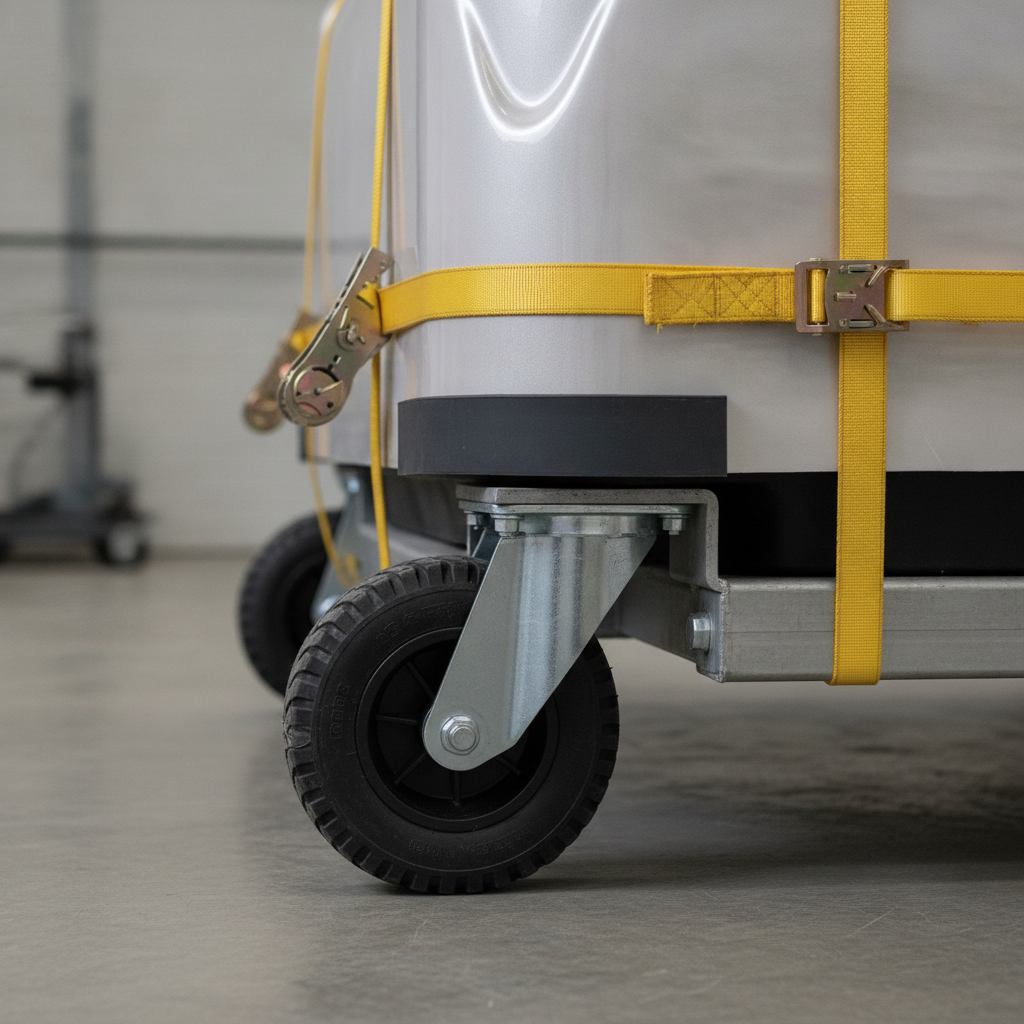
- Tilt and secure: ratchet straps at 2–4 tie points; dollies rated 1,000+ lbs with wide pneumatic wheels.
- Ramps and angles: keep approach angles shallow (about 10–15 degrees) to avoid shell stress.
- Vehicle securement: use multiple anchor points and re-check strap tension after the first mile.
Placement and setup
- Final positioning: maintain 12–18 inches of clearance on sides for service access.
- Base and leveling: set on a concrete pad or reinforced deck; use shims for minor grade variations.
- Reconnect (optional): electrical should be handled by a licensed electrician; fill, purge air, and check for weeps at unions.
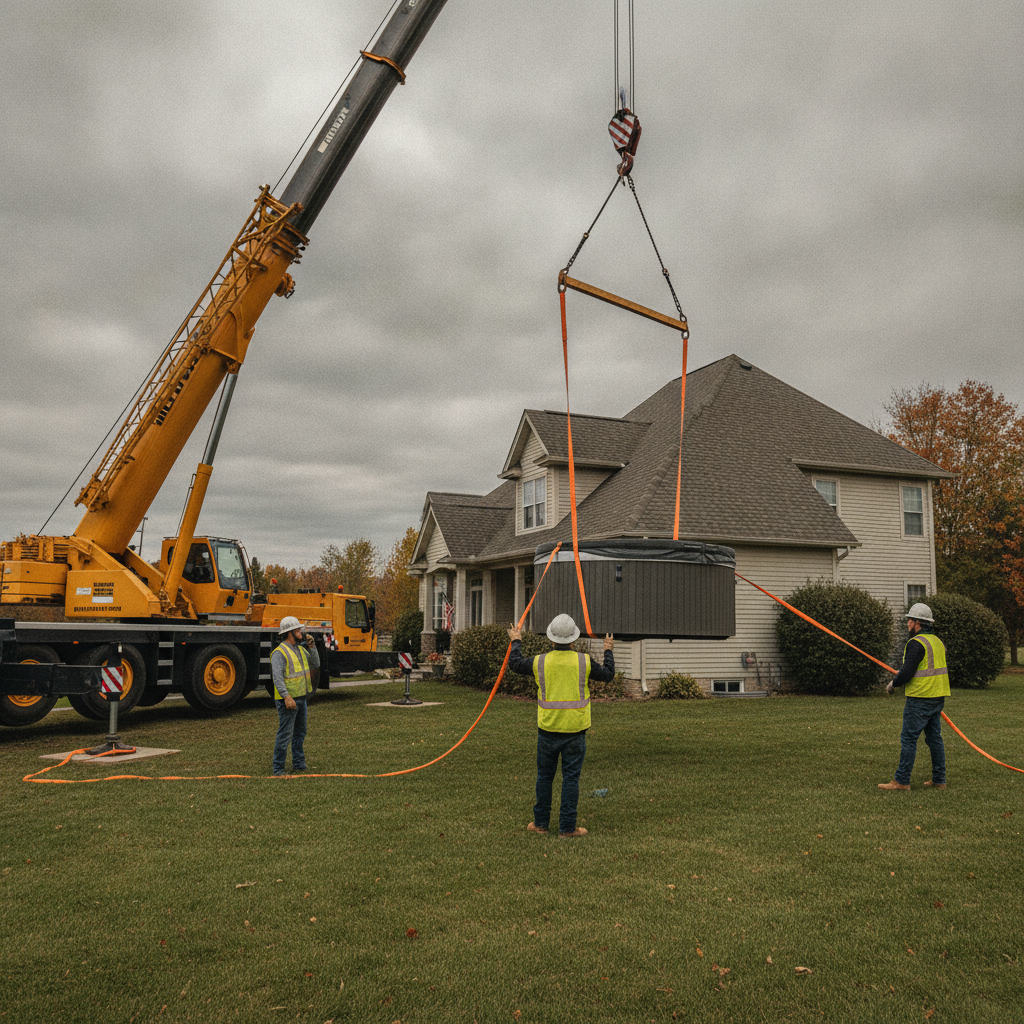
When a crane is involved, the crew builds a rigging plan with balanced pick points and spreader bars to protect the shell. Tag lines help control swing, and wind thresholds dictate when it’s safe to lift. This reduces the chance of side loads or crush damage during the pick.
Types and Methods of Hot Tub Moving
Three methods dominate: ground-route with spa dollies and ramps, mechanical assist with forklifts/boom lifts for obstacles, and crane picks when ground access is impossible. Crews choose the lightest safe method first and escalate only when structure, trees, or terrain block the path.
Ground-access moves
- Spa dolly: wide wheelbase, high load rating (often 1,000–1,200 lbs), and non-marring tires for pavers and turf.
- Rigging: 2–4-inch straps, edge protectors, and redundant ties for tilt control.
- Ramps and sheets: plywood runways spread point loads over soil and lawn, reducing rutting and sink.
Mechanical assist
- Forklift/telehandler: useful where grade or steps make hand-dolly unsafe; requires rigging clearance.
- Boom lifts: help over short walls or railings; spotters manage swing radius and pinch points.
- Risk control: tag lines, barricades, and communication headsets maintain control around obstacles.
Crane picks
- When required: tall fences, tight side yards, or multi-story decks with no straight route.
- Rigging plan: spreader bars prevent strap crush; lift points balanced to protect the shell.
- Coordination: permits or temporary traffic control may be required depending on jurisdiction.
The Real Cost Factors (and How to Control Them)
You influence hot tub moving cost by simplifying access, reducing weight, and minimizing risk. Measure everything, drain completely, remove obstacles, and choose pros with specialty gear. Each friction point—stairs, slopes, tight turns—adds handling time. Preparation removes friction points and keeps the move predictable.
Key cost drivers
- Size and weight: 500–1,100 lbs dry; larger shells need more hands and heavier rigging.
- Access complexity: 30–36 inch gates, 90-degree turns, decks, soft ground, or narrow side yards.
- Distance and logistics: door-to-door travel time, staging limits, and parking rules.
- Equipment needs: dollies, ramps, plywood, stair climbers, forklifts, or cranes.
- Risk and protection: extra padding, edge guards, and time for re-strapping and checks.
Actions that lower total effort
- Clear routes to 36 inches: remove gates or fence panels temporarily to widen paths.
- Drain and dry 24 hours ahead: water in lines adds weight and sloshing risk.
- Stage accessories: detach cover lifters, steps, skirts, and bag hardware for quick loading.
- Document measurements: draw the tightest turn with dimensions; share photos or video.
- Ground prep: lay plywood on soft soil; mark sprinklers and shallow irrigation lines.
In our experience, the most common surprise is a narrow gate that looks wide to the eye but measures under 32 inches at the hinges. That inch or two dictates method changes. Take five minutes to measure with a tape—your future self will thank you.
Step-by-Step: A Pro Move from Quote to Placement
A streamlined move follows eight steps: scoping, access survey, prep and drain, disconnect, pad protection, lift and secure, transport, and final placement. Each step has checklists so small surprises don’t snowball into damage or delays.
- Scoping: share dimensions, model, estimated weight, origin and destination, plus photos/video.
- Access survey: measure gates/doors, count stairs, note slopes, and plan temporary removals.
- Prep and drain: power off, drain via gravity or sump pump, dry lines and shell thoroughly.
- Disconnect: cap lines if necessary; coil cord; protect the control panel.
- Pad protection: blankets, corner guards, tape, rubber feet, and plywood runways.
- Lift and secure: straps, dollies, or crane rigging with balanced pick points.
- Transport: level load, multi-point tie-downs, and re-tension checks after the first mile.
- Final placement: verify base, level, clearances; optional reconnect and fill/purge.
Owners play a key role: when you handle what you comfortably can—like staging accessories and confirming power is off—the crew can focus on the heavy work. That division of labor speeds the day and helps keep everything on plan.
DIY vs. Hiring Pros: What Most People Miss
DIY can look cheaper on paper, but risk exposure, tool gaps, and injury potential change the math. Specialty movers bring rated gear, trained crews, and insurance. That combination dramatically reduces chances of shell cracks, strains, and property damage.
- Weight reality: even compact spas exceed 500 lbs and are 6–8 feet long—awkward and unforgiving.
- Tooling: spa dollies, 2–4-inch straps, corner guards, stair climbers, and ramps aren’t typical rentals.
- Crew coordination: clear commands, hand signals, and planned reposition breaks prevent mistakes.
- Insurance: coverage protects your property and the crew; always request proof of insurance.
Here’s the thing: improvised gear often fails at the worst moment—on stairs or at thresholds. Professional-grade equipment is rated for loads and angles, which is why trained movers use it religiously.
Tools, Gear, and Helpful Resources
Successful spa relocations depend on purpose-built dollies, wide straps with edge guards, ramps with low approach angles, and protective materials. Add checklists and clear communication, and you have a repeatable, low-risk move from first tilt to final placement.
- Core gear: spa dolly (1,000+ lb rating), moving blankets, corner guards, rubber pads, and protective film.
- Rigging: 2–4-inch ratchet straps, spreader bars for crane picks, and tag lines for swing control.
- Surface protection: 1/2–3/4 inch plywood sheets, neoprene mats, and threshold ramps.
- Safety: gloves with grip, steel-toe boots, eye protection, and hard hats for overhead lifts.
- Planning tools: measurement worksheets, move-day checklists, and access photo guides.
For transport, cargo securement is non-negotiable. Multi-point tie-downs and strap inspections during travel are standard practice for professional movers.
Best Practices to Keep Your Move Smooth
Think like a rigger: simplify the path, balance the load, and communicate every move. Prep early, protect surfaces, and keep angles shallow. Confirm responsibilities—who drains, who disconnects, who removes gates—so nothing stalls on move day.
- Measurement discipline: verify the tightest point twice; aim for a 1–2 inch safety margin.
- Angle management: keep approach angles under 15 degrees; step up in small increments.
- Contingencies: pre-plan for rain, soft ground, or wind if a crane is scheduled.
- Documentation: photos before/after; note pre-existing scuffs and electrical details.
- Communication: one lead gives commands; everyone acknowledges before moving.
Risk Management and Safety Fundamentals
Most incidents trace to rushed prep or improvised gear. Use rated equipment, assign roles, and control the environment—barriers, spotters, and slow, deliberate movements. Protect fingers, keep bystanders clear, and never lift beyond tool ratings.
- Load ratings: confirm dollies, straps, and anchors exceed the spa’s dry weight plus margin.
- Pinch points: plan handholds before tilting; maintain three points of contact.
- Weather: wet surfaces change friction; use mats and slow your pace.
- Vehicle checks: re-tension straps after the first mile; inspect at each stop.
- Crane zones: define swing radiuses; use barricades and tag lines; keep non-crew outside.
Water and electricity are a dangerous mix. The U.S. Instead, they scope volume, access, distance, and equipment, then outline what’s included and any triggers for extra work. Clarity on roles—who drains, removes gates, or handles electrical—keeps the final outcome aligned to expectations.
- Transparent scoping: detail the route, obstacles, and lift method in writing.
- Clear inclusions: list labor, equipment, pads/blankets, and transport.
- Roles and prep: define who drains, disconnects, and stages accessories.
- Change triggers: note what adds work: new obstacles, weather delays, or surprise stairs.
- Documentation: photos and diagrams keep everyone aligned.
Here’s what most people don’t realize: a 10-minute access video can replace multiple site visits and remove 90% of “unknowns.” That’s why professional teams push for photos and videos early in the process.
Comparison: Methods, Complexity, and Control Levers
Choose the simplest safe method. Ground routes with a spa dolly are fastest when access allows; mechanical assists bridge obstacles; cranes solve the unsolvable. Your prep—clearing 36-inch paths, draining, and staging—amplifies whichever method is used.
| Method | When Used | Complexity | Main Risks | Owner Prep That Helps |
|---|---|---|---|---|
| Dolly + Ramps | Clear ground path, few tight turns | Low–Medium | Thresholds, soft soil | 36-inch path, plywood runway |
| Mechanical Assist | Steps, short walls, steep grades | Medium | Swing radius, tip control | Remove railings, spotters ready |
| Crane Pick | No viable ground route | High | Wind, rigging crush | Secure permits, clear landing zone |
Use this table to align expectations with your crew before move day. It’s perfectly normal for a plan to switch methods if access conditions differ from what photos suggested. That’s why a pre-lift walkthrough is so valuable.
Mini Case Studies: Real-World Scenarios
Every yard is different. These three scenarios show how access, obstacles, and prep change the plan—and the effort. Notice how the lightest safe method always wins when the route allows it and how simple changes can avoid heavy lifts.
Side-yard squeeze with two 90-degree turns
- Spa: 7.5 ft square, ~800 lbs dry.
- Access: 32-inch gate, two tight turns, paver path with edging stones.
- Plan: remove one gate panel, add plywood runway, dolly with edge guards and spotters.
- Outcome: slow, controlled tilts at turns; no cabinet scuffs or chipped pavers.
Action tip: if your narrowest gate is under 32 inches, ask whether a temporary fence panel removal is feasible. That single change can unlock a faster, safer route.
Deck descent with 10 steps
- Spa: 7 ft rectangle, ~700 lbs dry.
- Access: deck stairs, 10 risers, 36-inch width with railing intrusions.
- Plan: powered stair climber assist, spotters, landings staged with neoprene mats.
- Outcome: clean handoffs and tread protection; no impacts to railings.
Action tip: measure stair tread depth and total run. A powered stair climber needs clearance for both wheels and frame, not just the spa shell.
No ground route—over the roof
- Spa: 8 ft square, ~900 lbs dry.
- Access: blocked side yards, tall fence, and mature trees.
- Plan: crane with spreader bar, tag lines, wind threshold checks, and a defined exclusion zone.
- Outcome: precise placement with landscaping intact and no contact with eaves.
Action tip: crane days are weather days. High winds change lift decisions; be ready with a reschedule window if needed.
Need a hand planning your move?
A short video walk-through of your path—gates, stairs, slopes, and landing spot—lets pros build an accurate plan the first time. Share dimensions and photos, and you’ll eliminate most unknowns before move day.
Want a second set of eyes on access, safety, and equipment? Share dimensions, short videos of the route, and any concerns. A professional coordinator can flag red flags early and suggest simple fixes—like temporary panel removals or plywood runways—to smooth everything out.
Frequently Asked Questions
These short answers address common planning questions about timing, prep, and safety. Use them to prepare a clean, predictable move day without surprises or last-minute scrambles.
How long does a hot tub move take?
Simple ground-access moves often finish within a few hours, including draining and loading. Complex routes with stairs or crane picks add time for rigging, safety checks, and controlled placement. Planning and prep shorten the schedule significantly.
Do I need to drain the spa before movers arrive?
Yes. Draining and drying at least 24 hours in advance removes hundreds of pounds, prevents sloshing, and speeds handling. A sump pump clears most tubs in minutes; leave unions accessible for quick checks.
When is a crane required?
A crane is used when there’s no safe ground route—think narrow side yards, tall fences, or multi-story decks. The crew creates a rigging plan with spreader bars and tag lines, and monitors wind before the pick.
Can I move a hot tub with friends and a pickup?
It’s risky. Spas are bulky and top-heavy, and improvised gear leads to injuries or shell damage. Specialty movers use rated dollies, straps, and surface protection—and they’re insured—dramatically lowering risk.
What should I do the day before the move?
Drain and dry the tub, power it off, remove and stage accessories, measure the tightest turns, and clear a 36-inch path. If ground is soft, lay plywood. Share photos or video with your mover for final confirmation.
Key Takeaways
Keep it simple, safe, and planned. Measure tight points, clear wide paths, drain early, and align on method and roles in writing. The right prep reduces handling time, risk, and surprises from first tilt to final placement.
- Hot tub moving cost follows complexity—simplify access to lower effort.
- A 36-inch path and shallow approach angles avoid heavy lifts.
- Drain and dry 24 hours early; stage covers, steps, and panels.
- Use rated dollies, straps, and protective materials every time.
- Crane only when no safe ground route exists; follow strict safety rules.
Conclusion and Next Steps
Hot tub moving cost is about managing complexity. Your prep—measurements, clear paths, full drain, and staged accessories—keeps the job simple and safe. Choose trained, insured specialists with the right gear to protect your spa and property from the first tilt to final placement.
- Measure every turn and threshold; target 36 inches of clearance.
- Drain and dry a full day early; stage covers, steps, and panels.
- Confirm the route, lift method, and responsibilities in writing.
- Plan for weather contingencies if a crane is on standby.
Ready to relocate your spa the safe way? Share measurements, short videos of your route, and timing. A professional coordinator will translate your details into a clean plan and a smooth move day.